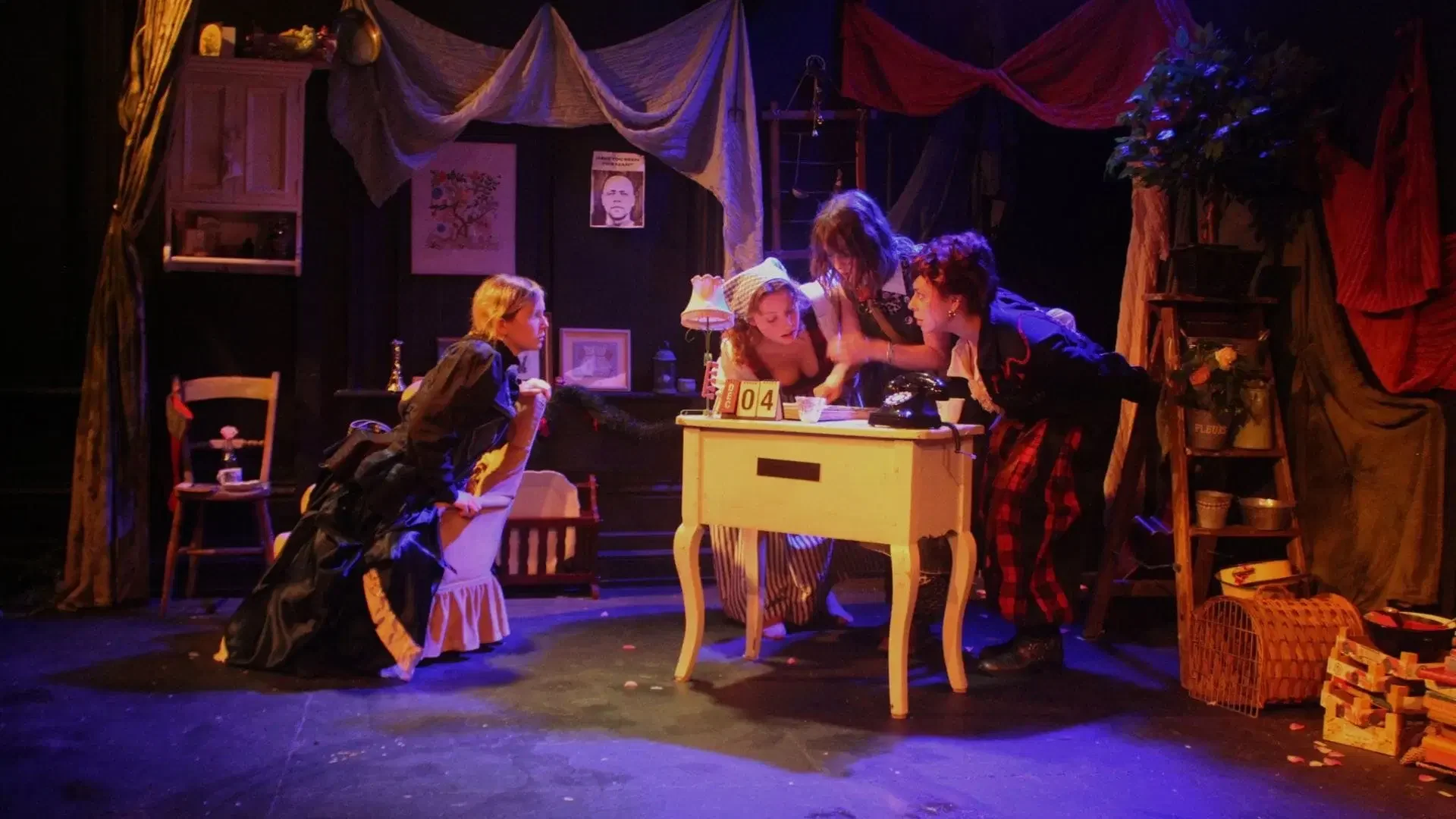
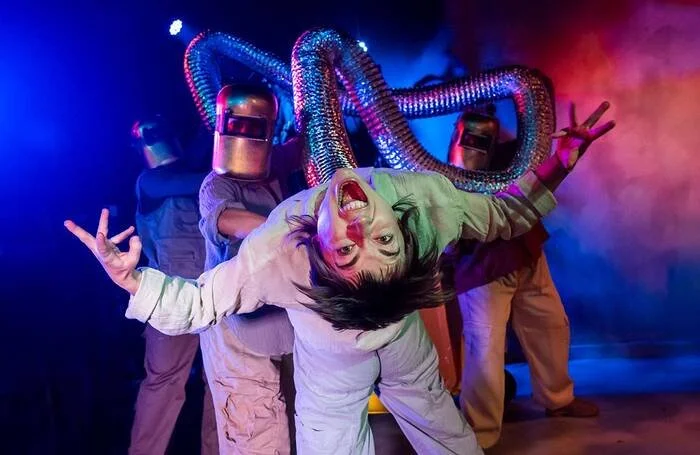
A clown show with some highly intelligent observations, Hansal and Geetal failed to meet its potential. The show had an interesting premise — clowns as children, who experience micro aggressions and colonial education through the lens of a school, where the wicked witch is personified by the teachers at the school who impose colonial thought and practice. Unfortunately, the show had too many ideas, and didn’t fully realize many of them, leaving the scenes and undercurrent feel slap dash and uneven. There was a significant reliance on audience participation in the show, however the production failed to set the expectations and rules for this participation, meaning that the first few attempts fell flat. While this did settle in later on, the scenes continued to feel like they were relying on the audience rather than guiding us somewhere. There is a nugget of something here, but it needs a lot of work before it sees its next audience.
new work
Diaspora Inferno: From My Grandmother's Kitchen @ Drayton Arms Theatre
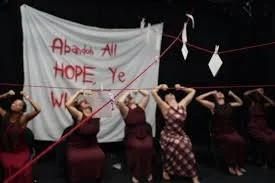
A group of women, moving through their own stories in the world, yet with a common thread. Diaspora Inferno explores the common experiences of women across places and times through highly physical and representative work; the piece is experimental in nature, and really pushes the edges of how story is typically told on London stages, leaning instead into an outside-in approach, stepping away from narrative and arguably even structure, yet creating emotional moments of connection for the audience.
The scenes are not evenly powerful, however those that are - notably the actor eating an ice cream, telling us a story of rationed sunshine, is exquisite, and will sit with me for a long time to come. I would love to see this piece develop further to clarify some of the ideas and images, as there is something really compelling and engaging at its core.
Transpose Pit Party: Subverse @ Barbican Pit
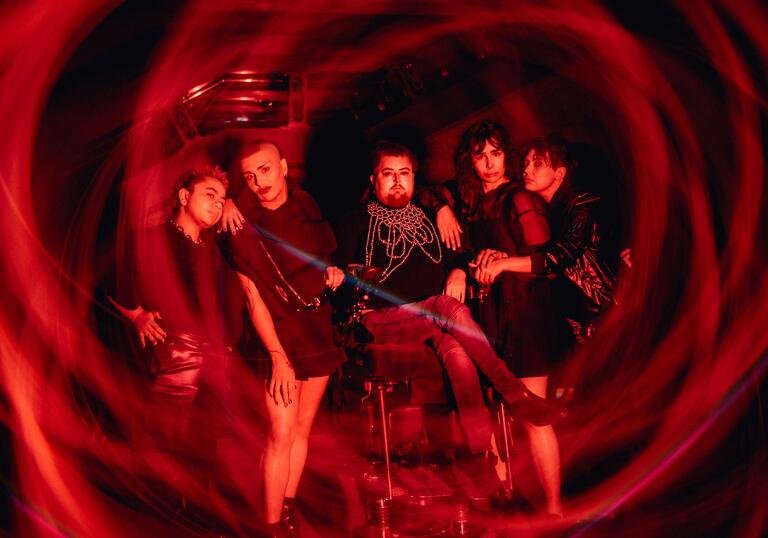
A short evening of five connected pieces, the Transpose Pit Party bills itself as a cabaret, but felt more like an installation mixed with a concert. Featuring new work by 5 Trans artists, largely song and movement based, the Subverse evening leveraged strong production value through simple use of light and scaffolding, along with a gauze curtain.
The musical production was strong, however what really stood out for me was the innovative use of movement. In particular, during the opening song the beautiful imagery of a shadow who the performer was wrestling down, as if wrestling with others’ opinions of themself, or their own internal demons, was quite striking. Similarly, the movement choices throughout though simple, were highly effective and dramatic, creating tension in the performance.
Uprooted @ New Diorama
Uprooted is an esoteric piece of performance which lives in the frame of physical theatre and imaginative use of props to create visual story. There are elements of a narrative, at times through text but more often (and more effectively) through visuals and sound — indeed the text moments were the weakest of the production, and in many ways undermined the larger thrust argument of the piece.
There were many strong visual and audio elements, but also many moments of confusion, shouting, and indiscernible communication to the audience. While the ideas were original and innovative, at times it almost felt like innovation for the sake of it rather than to convey an idea — which is too bad. The ideas themselves were interesting and compelling however there were too many, and often they were under-served by the loyalty to using the props in new and different ways.
Overall there’s something here, but it needs another round of refresh to get there.
Flowers of Srebrenica @ Jacksons Lane Theatre
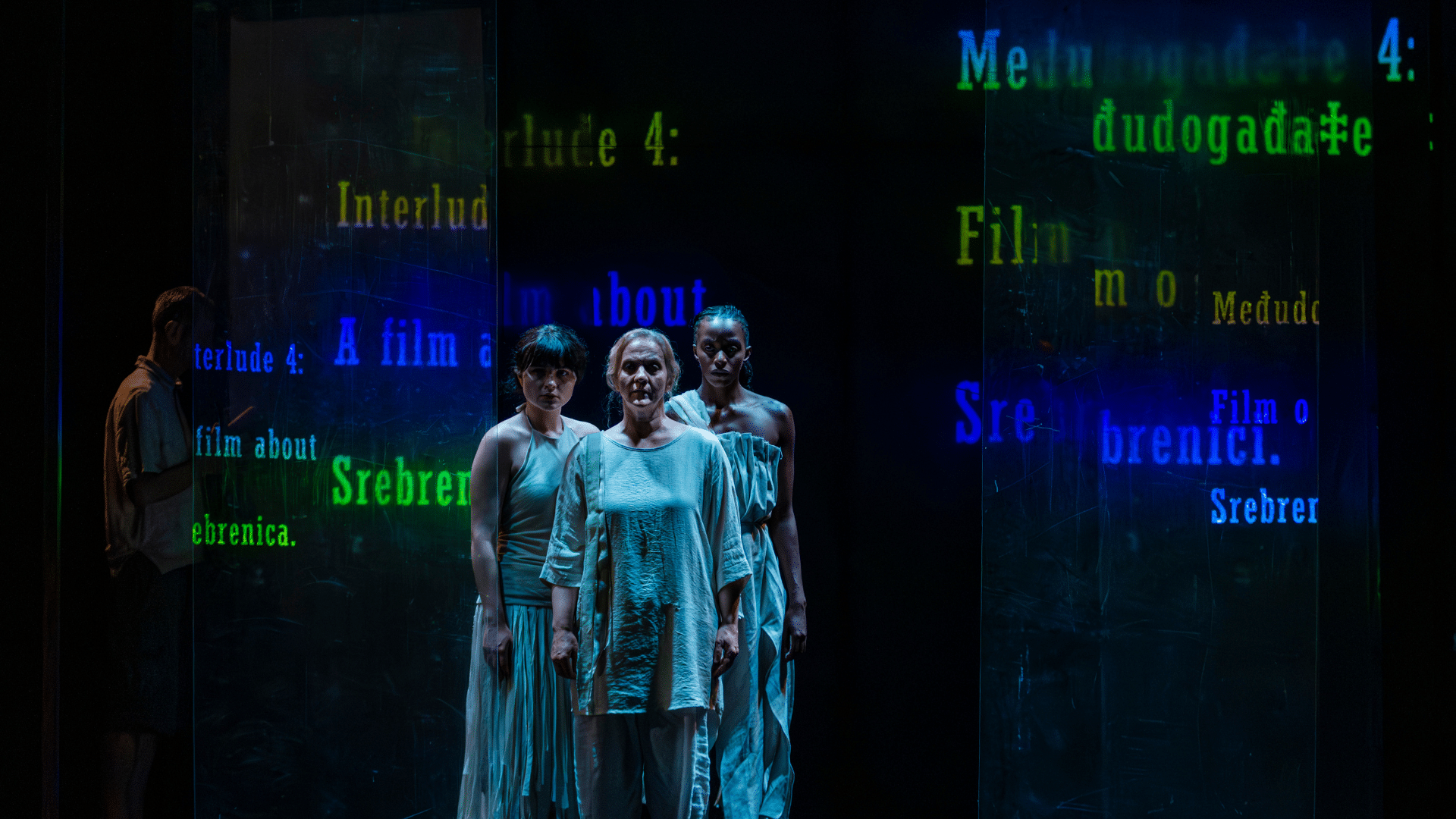
Flowers of Srebrenica is a new work inspired by the book of the same name by Aidan Hehir. It blends physical theatre with video projection, interspersed with scenes, to craft a story about a moment in time, but also about this moment in time. The script jumps between these spaces — at times artfully, however the odd jump is clunky. Despite this occasional clunkiness in transition, the cast are uniformly exceptional to watch, supported by strong projection design and sound design to create the liminal space where the play exists.
Devised and performed by actors who themselves are displaced from places where genocide has taken place (or currently is taking place), the play confronts the “audience at home” as they call it; those of us who sit at home, watching these atrocities unfold, but then are able to switch off the news and go to sleep in our warm beds. There are several moments where the 3 women, who act as a chorus but also almost as ghosts, weaving into the space and commenting on the experiences of the “real” people, remind us that this isn’t a thing in the past….it is something that is still happening today. Indeed one of the most poignant moments includes a stream of video with the names of those killed scrolling, seemingly forever, as the women offer handfuls of dirt to audience members, and another actor openly weeps.
It was truly delightful to see work created through techniques that are not text-first; the most powerful moments of the production were those where the performers’ physicality twisted and pent up to evoke an emotion in them — truly an outside-in approach that we don’t get to see on London stages as often as we’d benefit from. The company were uniformly compelling in this regard.
Mamuka @ Off Avignon Festival
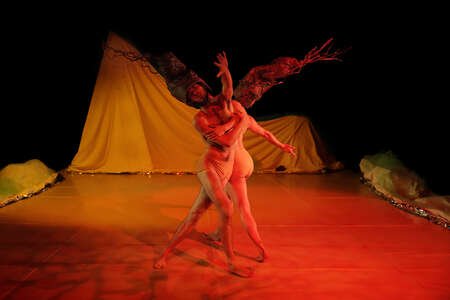
Mamuka is a magical dance piece for children, performed by two dancers. The piece employs puppetry and papier mache headpieces to support the dancers in creating various movements of different woodland creatures, all centred around mythical fairies.
The choreography was captivating; the young people in the audience (as well as us older people) were drawn into the world created by the dancers and their headpieces, with their physical vocabulary adjusting to create multiple layers of this world.
What was truly enjoyable was that the movement vocabulary wasn’t simplified for children; it used complex imagery and technique based in modern dance, which elevated the performance.
Matthew Bourne's The Midnight Bell @ Sadlers Wells Theatre
Full of Jazz era tales of love and connection across a lonely city, Matthew Bourne’s The Midnight Bell is a magnetic and captivating new work. Using Jazz standards lip synched by the dancers interlaced through the production to create narrative as well as commentary, the choreography moves through place and time with a heavy theatricality. The same spaces are used in an overlapping manner (reminiscent of the way Complicite use space) to great effect, creating a sense of togetherness in the loneliness the characters exude.
Beyond the choreography which was stunning, the use of the physical space, indeed transforming our perspective so that we see the same room from multiple angles, and the same activities which were hidden revealed. It is a truly stunning manipulation of perspective to create story of what is hidden, private, versus what is revealed.
The Uncanny Trilogy @ Colab Tower
This is a trilogy of improvised immersive operas; each takes place in a tunnel under Southwark Bridge, and uses a similar structure. 3 “sections” of ceremony, all of which are sung by the cast (improvised) and set the audience on an escape room style task. On the whole, the concept is fun (if a bit silly) however the drawn out execution of it (2.5 hours x 3!) is far too long for the content that is actually prepared, and quite reliant on the audience to infer or make up their own story, rather than play by the rules of this invented universe. Like a frustrating improv show, audience members resort to trying to be the most funny or outlandish, which while amusing, means the whole lacks drive and purpose. Furthermore, while it is advertised that the pieces stand alone, indeed they do not. It is unfortunate, as the performers are all clearly very talented, and the seed of the idea is strong….it is simply far too much time for the idea to have true meaning and engagement. Each part of the trilogy is considered below.
Come Bargain:
When the audience enter the tunnel for the first part, the rules of the space are explained, including safety and other considerations. The “guild” are required to sing, we are not, and there are tasks and activities with strict rules and consequences explained. The audience are invited to choose an activity, and spend the time working to solve riddles or create asks of the “uncanny thing” which is restrained at the far end of the tunnel. Initially, the stake feel high, as the audience try to solve issues affecting the local community, however as we move into the second and then third phases of the ceremony, there is no change to the stakes; indeed the scenarios we aim to solve get less engaging and serious, so it is difficult to remain engaged, despite lots of clever physical material. Further, moving between activities while invited, is quite tricky, as the rules of the new activity are not explained…resulting in audience members checking out somewhat, or returning to their first choice. The activities are fun, but lack drive and a reason to keep doing them, so the energy of the evening quickly dissipates, exacerbated by the interval after which the audience come back for more of the same.
Come Worship:
This second of the trilogy focussed on joy and worship, participants were offered the opportunity to create gifts for the uncanny king, and ask for blessings. It was interactive, without respite — there is no hiding or observing, with actors in your face, and the expectation that you will play along and make activities and objects. The instructions were quite murky, and the rules of the universe unclear; particularly if you had not attended the previous part of the trilogy, I think audience members would be lost. Furthermore, while there was much activity, the connections and actions lacked tension and purpose, we weren’t driving anywhere. Despite that ineffectiveness as a piece of theatre, the production did succeed in another area, which is creating connection. The individuals at the performance were clearly hungry for connection, collaboration, and debate, playing along with the production, often creating their own version of the rules of the world, which seemed to work to move things along, although again, rudderless without a clear objective, purpose, or goal to the evening.
Come Murder:
The third and final instalment of the trilogy, Come Murder was the least structured. Audience were brought into the tunnel, and immediately dove into the world....but with the least explanation of all the pieces of the trilogy. Audience members who had not been in previous performances were lost, and the clarity between the tasks for the participants was murky. This time, there was no ceremony, and only 2 parts — time to put restrictions or bring uses to the thing, and then time to debate over which to do. The first section was allotted too much time, and lacked sufficient structure to keep the audience engaged, and after some time several audience members ran out of ideas and purpose; they did stand around talking to one another (about the play) however had stopped interacting and engaging with the design and structure of the show. The second section was for a debate about what to do to the thing...however outside the thing’s death, the consequences and implications were weak, and the debate itself devolved into a rather loud shouting match at times, with playful but at times screeching voices. The mood on the whole was fun and playful, but again here, it lacked purpose and drive. It was a fun (if odd and silly) evening, but not exceptional theatre.
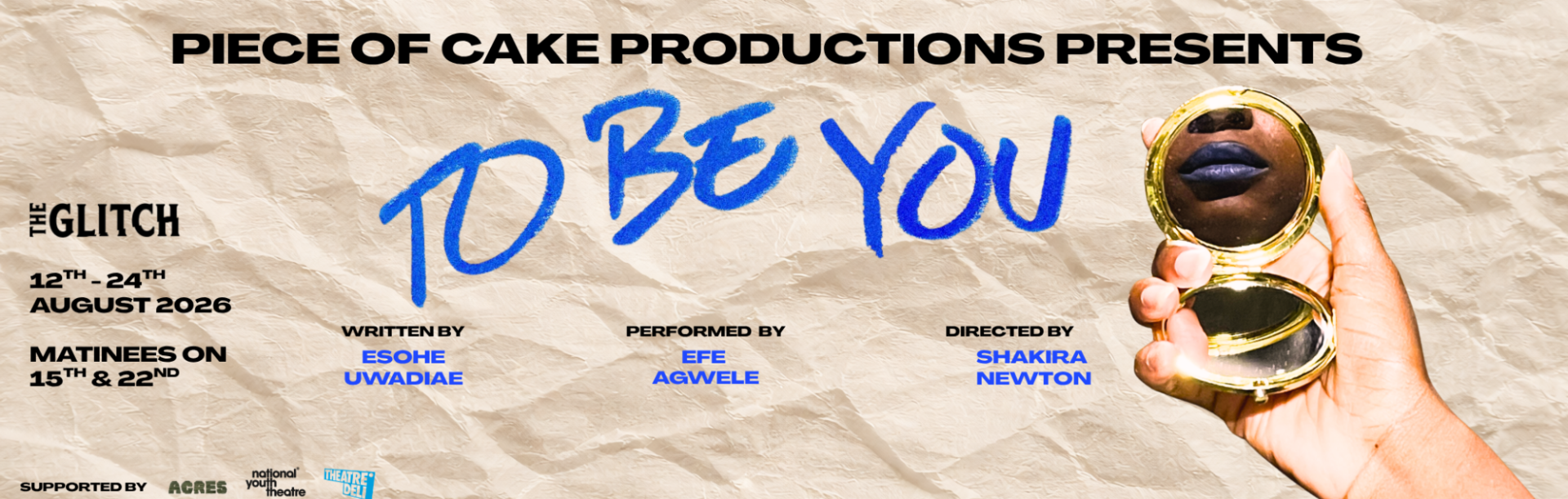
Save The Princess @ Hen & Chickens Theatre
Save the Princess is a choose your own adventure style play, where the audience have agency over the choices of the lead character, Princess Plum, through a clever app that works similarly to online quizzes or polls. The choices of the audience then dictate which world the actors will find themselves in. The actors are adept at jumping into the surprise scenes, and the composition of the piece is clever. The performances, direction, and overall production, however, fail to sizzle. They are passable, but nothing remarkable — it could have been shorter, less shouty, and tighter in terms of timing and pace to properly evoke the urgency that video games create. There was an interesting point of view on the absence of female voices in the video game universes, and the inherent misogyny in these spaces which was smart; I would have like to see the play twist the knife on this just a little more and lean in, rather than entertaining us with just a sprinkle of provocative thought.
When The World Turns @ Southbank Centre
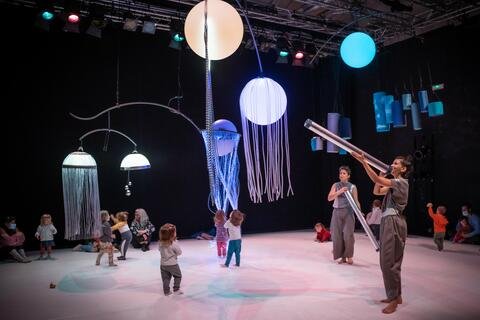
When The World Turns is a multisensory experience performed within a living performance space. Audience members are welcomed in small groups into a circle of plants and gentle lights, under a canopy. There is a soundtrack that underscores the whole experience, which is not a story per se, and does not include text, but rather focusses on attention to all of the other modes of communication — sound, touch, song, breath, and beyond. The production is visually sumptuous, with scents and things to touch, and most notably, the performers focus on a handful of audience members, allowing them the space and time to interact with the performance on their own terms and in their own time.
Sound plays an integral role; with the aforementioned underlying soundtrack, sounds emerge from different areas and speakers that are placed around the circe, and at times move, with ingenious use of fishing rod style capacity to raise and lower, and then also through the performers themselves — and at times the audience. It is immensely playful and surprising for the audience, with sounds coming from everywhere. This could result in feeling overwhelming however the gentle care with which this is done make it peaceful, even in moments of tension. Animals are created from objects you would find around any house, lending that sense of play and creating the feeling you could re-create this in your own imagination at home — I couldn’t help but think of the audience wanting to return home and recreate the elephant with a bit of tube, or the lightning bugs with tiny flashlights.
The result is an experience that encourages us to slow down, look, and listen — and simply breathe along with the plants beside us. What is truly remarkable is the way that access is woven into the production at every turn; it never feels like an afterthought or an add on, but instead it is at the core of the creation. Creating this space for individuals is of course incredible for the target audience - under 12’s of all abilities — but you could see the delight and surprise of their adult caregivers, and even of those of us observing from outside the circle. It is theatre which is intentionally slow and deeply thoughtful, almost meditative; you emerge from the hour filled with a comfortable joy and appreciation for simply being.
I found myself as an outside observer wanting to be inside the circle; for me this is the mark of a production that is hitting the mark. I’m not the target audience and yet wanted to be embedded in it.
Blood Show @ Battersea Arts Centre
The audience are warned before going in of potential splatter, and offered ponchos. This obviously sets an expectation, which is immediately subverted when we walk into a room where the playing space is pristine and white, the performers wearing clean white outfits, while one performer lounges in a chair, covered in fake blood. As we wait for the show to begin, La Roux’s The Kill plays on loop, and I wonder about how the actor managed to get into the white jumpsuit and not get it covered in blood, which drips from the toe that dangles over the edge of the white chair, onto the white floor.
The early movements of the performance are set to silence; there is a ghost (which turns to highly comedic effect later on) and two performers, dressed in white. One covered in blood, one face made up like a ghost in a pantomime. The choreographed movements of a fight ensue, the fight becoming more graphic but also more performative in each repeat of the cyclical choreography. The actors vocalise at first, and in later “rounds” are accompanied by music. As they move through the space the pristine white is tarnished, with the mess expanding and getting increasingly absurd as they go on.
There is an element of duration at play, as we witness nothing explicitly happening, while it is clear that the meaning of the fighting and the ensuing mess is evolving and expanding before our eyes. Without narrative the audience fill the gaps, imbuing meaning to the marks in the floor, the lengths of the pause between fights as the actors prepare again. Were the songs different or the same? Did the cycle of the choreography change intentionally?
The cycle reaches a pinnacle of absurdity with literal buckets of fake blood dumped on the floor; this is where the production lost me. Earlier moments caused thoughts of our willingness to watch violence on TV and in films so casually, whereas in a live environment it was quite jarring. These final absurd moments while funny, did (for me) take away from the overall feeling of the production.
Notwithstanding, this was a feat of production; the actors were exceptional in their physical commitment, and the design was clever and inventive, continually surprising the audience with where the blood would come from next.
CONGREGATION - Es Devlin @ St Mary Le Strand
50 individuals. 50 stories of coming to London under duress, forced to leave their homes. 50 portraits.
Es Devlin’s latest installation THE CONGREGATION at St Mary Le Strand showcases humanity in its purest form. Working with UNHCR and a team of co-writers, she met, drew, and interviewed 50 refugees living in London. Some who came decades ago, some only a few months — but regardless of when they came, each carries a story of creating a new home.
As you enter the church, the portraits are arranged like a choir, each drawn person holding an empty box. From here, a story unfolds, showcasing the uniqueness of each story while also drawing a thread of commonality, highlighting the humanity of these individuals, and their connection with the audience. Using mapped projections, music, and spoken word, we are transported. Despite the stories of strife, each individual shares a story of hope. The overall effect is surprisingly uplifting and hopeful.
Viola's Room - Punchdrunk
For me, there is nothing more exciting than an immersive performance that is simultaneously intimate. Many of Punchdrunk’s previous shows have functioned on a monstrous scale, however their latest offering, Viola’s Room, takes groups of no more than 6 through an audio guided journey, which magically unfolds before your eyes. The scale of the production is no smaller (in fact, i couldn’t help but wonder at the technical prowess necessary to create this event) however it feels tiny, miniscule, like you are just happening upon it.
Each audience member is given a headset, and invited to journey the exploration barefoot, creating a sensorial exploration full of touch and smell. You’re instructed to follow the lights, which is thrilling, but at times also nerve wracking as you think you see lights, or second guess the ones you do. The combination of narration, light, and space creates the most exciting suspense throughout.
My only quibble was pacing; I think it could have benefitted from even more slow moments, even the slow ones felt quick as you take in the immense detail of the space and story.
Definitely recommend seeing this!
A Spectacle of Herself @ Battersea Arts Centre
Sometimes you get the evening of angry feminist performance art you need. Laura Murphy’s solo show blends spectacular design with a brilliant and challenging script, pressing into moments of tension or discomfort to create recognition of the anger boiling in our bellies here in the 21st century. The piece is at times circus performance, at times expressionist art, at times standup comedy, and also a lecture, a movement driven academic argument.
In particular the overlay of relationships to space exploration with relationships to gender and sexual expression which in parallel to one another as the overarching thematic movement of the piece is an emphatic expression of our current world. The truths Murphy speaks through voice and movement choices are incredibly resonant.
Watch for this to be re-mounted, and GO.
Bacchanalia - Sleepwalk Immersive @ St Peter's Crypt
An exciting performance space, Bacchanalia uses the basement crypt of an old church in Bethnal Green to create an immersive performance telling the story of Dionysus’ return. Using a strong physical performance vocabulary, the performers move between multiple areas while the audience, clad in black capes, are allowed reign to roam and watch where they like. There are scenes which overlap that serve one another, however there are also times where the sound bleed from one room to another is more distraction than support. Despite strong work by all performers, I found it hard to find space to watch, or to hold attention outside the the group scenes. There also seemed to be a few red herring scenes, objects or plot lines introduced that went nowhere.
On the whole, a fun experience, but with its heavy reliance on the techniques of Punchdrunk who have made great strides in the immersive space, it is hard to see that this production brought anything new to the discourse of immersive theatre.
Katharsis by Yvette Nolan @ Prairie Theatre Exchange (limited recording)
I viewed this via Prairie Theatre Exchange on Vimeo, during their limited free availability of the piece on demand.
Yvette Nolan has written a love letter to the theatre. It is gentle and kind, acknowledging the uncanny situation we find ourselves in — desperate for connection and stories, but unable to serve them in our preferred in-person manner. A time when theatre is more necessary than ever, and yet impossible in its old form.
The use of the enormous and empty PTE mainstage space is delightful. Tracey Nepinak guides us with comfort and reassurance, reminding us that we’ve been paused before, but will come back. She is charming and engaging (as always), and I honestly couldn’t imagine a better actor for this role.
A delightful treat of a piece in response to these pandemic times.
End Meeting For All - Forced Entertainment
I watched this in recording. You can watch Part 1 here. You can watch Part 2 here. Both are available until June, and Part 3 airs May 12.
Disjointed. Unfocused. Overwhelming.
Forced Entertainment’s End Meeting For All series are improvised public group calls between company members isolated in their homes. Each begins abruptly, and ends abruptly, yet despite the improvisational nature, a structure appears. People ignore others in the call. People get distracted and wander away. People remain deeply focused on a single object or question to the point of irritation. Technology fails (or does it?).
This reflection of our time, when interaction with our closest friends, colleagues, and family members is largely through the blue-white glare of a computer monitor, is stunning. Forced create a piece of performance that is at once anti-performance, and high-performance. We are all living in this recognizable yet utterly foreign version of our world. It is funny, it is sad, it is at times bleak.
This is theatre for isolated times.
Endless
I was commissioned by Convergence Theatre to write a piece inspired by phone calls and messages people were invited to share. . . their COVID-confessions. What follows below is original writing, by me, in response to two of those confessions.
Endless - A meditation on isolation, commissioned by Convergence Theatre
A meditation on isolation
By Kendra Jones, commissioned by Convergence Theatre
She sits on her sofa. Resisting the temptation to open her laptop again, to scroll again, to get sucked in to the endless sea of images. News clips, photos of someone’s kid. Memes. So many fucking memes.
/Facebook ding.
Ignore it. Ignore it.
Her mind drifts. . . she catches her reflection in the window.
She smiles.
She wonders, is that weird?
Smiling at yourself?
At your reflection? The vanity.
/Skype sound.
With the alarming digital noise now looping, far too loud into her living room, she realizes she hasn’t spoken to another person in three days. Like actually spoken words aloud. Her cat doesn’t count. Should she answer?
She pauses.
On the one hand, it would be lovely to see someone, even digitally.
To hear someone breathe.
To see them smile.
On the other hand, she acknowledges quietly, in her mind, that she hasn’t showered in those three days either. Her voice will probably be raspy from non-use, then she’ll have to explain that she isn’t sick.
Might just be easier to. . .
/Skype sound stops.
There was this time. . . back, before. . . whatever this is. . . she was on her way to work. She took an unusual route that morning. As she transferred from the streetcar to the subway, she walked past a few homeless people sitting on the ground. She smiled if they caught her eye, feeling sheepish for never carrying change or a granola bar in her bag to offer, suddenly self conscious of her privilege. As she turned the corner, a woman looked at her with eyes that pierced into her soul, immediately seeing this self consciousness, and said aloud, “she knows what it means to dress herself in black”. That sentence rang through her head the rest of that day.
It wasn’t upsetting. It was nice.
Almost comforting, really.
To be seen so clearly, so quickly.
It is hard for her not to wonder whether that will ever happen again. . .
Will we ever go back to real interactions?
Will it ever be comfortable to look someone in the eye again?
To brush up against them by accident, or sit back to back in a crowded cafe?
Will we ever sit in theatres or on transit, near to one another, to strangers again?
She wants to believe we will; that this forced only-online time will make us value real interaction more. Value closeness to those we love. To strangers. That if this ever ends, she won’t see couples on dates in restaurants looking at their phones, but instead looking at each other. Really seeing one another, deeply, honestly.
The weight of unproductivity sits on her shoulders as she realizes she is scrolling again.
She scrolls and scrolls.
How are there people thriving in this time?
Class - Scottee & Friends @ Progress Festival
There is something really special about this show. Living in a grey area between standup comedy, theatre, and performance art, Scottee’s Class lays bare the truths of growing up working class, and making a living as an artist. Armed with a microphone and red Adidas tracksuit, on white carpet (shoes OFF), Scottee confronts his largely middle class audience with the assumptions they have about the working class. At first playful and comedic, he brings the audience in and flatters them with comedy before turning the knife sharply, and reminding the audience that these stories are true. That they are his memories.
At the start, he asks the audience to identify as working class, or as middle class. Like the polite Canadians we are, most of the audience were shy to hold up their hands to identify as middle class, which I’m sure is not unique. For those of us who grew up working class, he reminds us this show is for them, but asks us to check in with one another afterward. I did not expect to be affected by this in the way I was. That permission to identify, the clear and honest stories of his youth, which in many real ways mirrored my own, punched me in the gut. When he warned us to check in with one another after the show, I didn’t expect to need it. I did. I had to leave the theatre quickly following the show due to other obligations, but found myself crying and grasping for breath on the phone when trying to give my husband a quick couple sentences about what I had just seen.
Scottee’s work is meaningful and powerful, and so important for people to see.
Out of Order by Forced Entertainment @ Southbank Centre
As a follower of Forced Entertainment’s work through video streams and available online recordings, I was thrilled to learn that my time in London would overlap their short run of Out of Order at Southbank Centre.
Chairs begin downstage in a line, appearing orderly, while a table sits upstage. The performance space is elevated several feet above the actual stage, with caverns around on all sides. This lasts approximately 30 seconds, before the 6 performers (3 men, 3 women, all wearing identical plaid suits, white shirts, and clown face) enter, and move them. From here, there is incessant movement; while the movement peaks and valleys, even the moments of rest and stillness are filled with the memory of movement.
What follows is an ongoing, highly choreographed yet impulsive and appearing improvised set of games; the actors fight and chase, they play with balloons, and chairs. They lead and follow, repeat and repeat, even when they are visibly questioning the action. At times certain characters have the strength to resist - to sit outside and comment. But this is fleeting, and they are shortly again sucked into following.
There are many layers, and none. Forced regularly do not impose a specific feeling or intention for how a piece should affect, but rather work in layered ideas, providing thoughts into the space, but no real answers, demanding the audience engage and fill in the blanks. At times we are overwhelmed with where to look, or at others pulled into the individual actions of one actor or another, and at yet others sitting, in silence, with our own thoughts. The simultaneous danger and inevitability of following along loomed loud for me in watching this work.
This is Forced’s first piece without words. It is not silent, however; two songs underscore various aspects (again, in repetition), and the rhythm of the balloons, or horns, or boots, or chairs, or even actors breathing, make a compelling score.
As a lovely bonus, the artistic director (Tim Etchells) and the 6 members of the company, shared their thoughts and answered questions in a 30+ minute Q&A following the show. It was exciting to hear some of my own interpretations of their work and ideas for how to engage audiences echoed in their approaches and intent. I’ve said this for years, but again…if you have the chance to see Forced Entertainment’s work in any capacity, do.